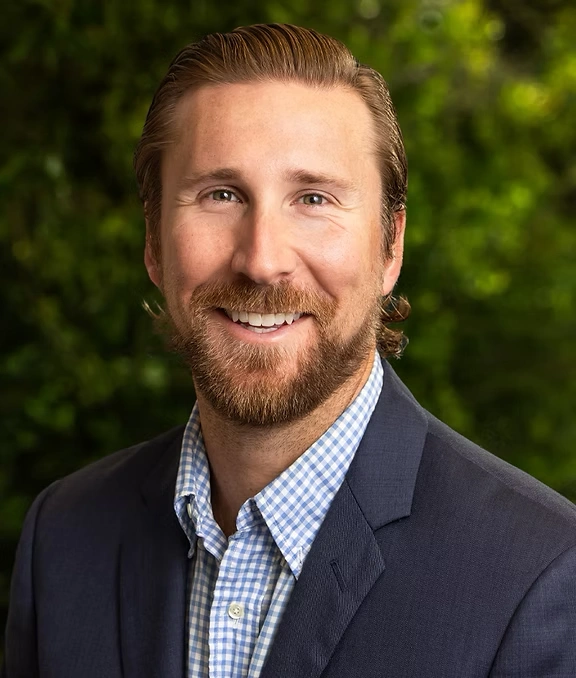


Interview with Dr. Peter Neff, M.D.

Spotlight Series Topic: Orthopedic Excellence: Dr. Peter Neff’s Journey Back to Corpus Christi

Guest Name: Dr. Peter Neff, M.D.

Guest Credentials:Dr. Peter Neff, a board-certified orthopedic surgeon and sports medicine specialist

Discussion Details: Spotlight Series: Spotlight Series: Meet Dr. Peter Neff: Local Orthopedic Surgeon & Sports Medicine Specialist | Coastal Bend Spotlight

In this episode of the Coastal Bend Spotlight series, Dr. Anthony Avila interviews Dr. Peter Neff, a board-certified orthopedic surgeon and sports medicine specialist. Dr. Neff, a Corpus Christi native, shares his journey from shadowing his physician father to becoming the team physician for local sports teams like the Corpus Christi Hooks and Texas A&M CC Islanders.

He discusses the importance of personalized care, the role of imaging and thorough examinations, and the significance of patient motivation in recovery. Dr. Neff emphasizes the value of trust and responsibility in the patient-doctor relationship and offers insights into the recovery processes for various common orthopedic procedures. Tune in for an in-depth look at Dr. Neff’s passion for community-centric healthcare and the intricacies of orthopedic surgery.

In this Coastal Bend Spotlight series, Anthony Avila, a physical therapist, interviews Dr. Peter Neff, an orthopedic surgeon and sports medicine specialist from Corpus Christi, Texas. Dr. Neff discusses his journey from Carroll High School to Texas A&M, followed by medical education and training in Houston, New York, and New Mexico. He highlights his work with athletes, including as a team physician for the US Ski Team and several South Texas sports teams. Dr. Neff emphasizes his commitment to patient care, the importance of a thorough diagnosis and treatment process, and the need for patients to be proactive and engaged in their recovery. The conversation covers common orthopedic cases he treats, particularly involving the knee, hip, and shoulder, and the variability in recovery times for different injuries and surgeries. The interview underscores Dr. Neff’s dedication to giving back to his community and his approach to providing exceptional care.

00:00 Introduction to Dr. Peter Neff
01:33 Dr. Neff’s Early Influences and Career Path
04:27 Returning to Corpus Christi
05:27 Dedication to Athletic Care
07:07 Defining Exceptional Care
08:46 Common Conditions and Treatments
10:59 Patient Traits and Expectations
17:51 The Role of Imaging and Examination
19:35 Knee and Shoulder Surgeries
24:21 ACL Surgery and Recovery

Address of guest’s business: Orthopedic Center of Corpus Christi, 6118 Parkway Dr, Corpus Christi, TX 78414

Anthony Ova: Hey guys, Anthony Ova, Doctor of Physical Therapy, owner of Avula Physical Therapy, host of your Coastal Bend Spotlight Series. Today’s guest is Dr. Peter Nef, a board-certified orthopedic surgeon and sports medicine specialist born and raised right here in Corpus Christi, Texas. After graduating from Carroll High School, he earned his undergraduate degree at Texas A&M, a medical degree at the University of Texas Houston, completed orthopedic residency in New York, and went on to a sports medicine fellowship in Taos, New Mexico, where he served as an acting team physician for the U.S. ski team, even traveling with the team for World Cup competition.

Dr. Nef specializes in arthroscopic surgery, joint replacement of knee, hip, and shoulder, trauma care, and comprehensive treatment of sports-related injuries. Dr. Nef cares for athletes across South Texas and serves as team physician for the Corpus Christi Hooks, Texas A&M–Corpus Christi Islanders, and Texas A&M–Kingsville Javelinas.

When he’s not in the OR, you’ll find him staying active outdoors and enjoying family time, including hiking, fishing, running, playing guitar, and enjoying South Texas surf and beaches. It’s an honor to welcome one of our own. Let’s dive in with Dr. Peter Nef.

Dr. Peter Nef: Hey, happy to be here, man. I couldn’t have done a better intro than that. That was good.

Anthony Ova: Well deserved, my man. Well deserved.

All right. So, thank you so much for joining us. With so much local influence in your background story, I’d like to start there. How did you develop a passion for helping people stay active? And back when you were walking the halls of Carroll High School, did you have an idea that this is where you’d be, or was there a personal moment or mentor that influenced your overall path?

Dr. Nef’s Early Influences and Career Path

Dr. Peter Nef: I think it started early with me for sure. My dad’s a physician here in town who’s been here forever. So ever since I can remember growing up, I was going to his work, shadowing him. I think I learned early on that I wanted to do something in that context. The medical field somehow was definitely going to be in my future.

I even have—it’s funny—in my office at work, I have a picture that I drew in kindergarten of what I wanted to be when I grew up. It’s me in a white coat and a stethoscope. I still have the white coat and the stethoscope, but I don’t know where they are because as an orthopedic surgeon I don’t really use those anymore.

So I had that idea pretty early on. Growing up, I was very involved in sports—especially baseball, which was my main sport—but growing up in South Texas, you pretty much play everything. Sports were always a big passion of mine.

As I went through schooling, I started shadowing early on—even through high school. One of my first jobs was working at the hospital bringing people back for X-rays and stuff like that. I kind of got an idea looking at what orthopedics was. I thought, “That’s kind of cool, what they do.”

During college, I went through the whole pre-med track, and all through the summers I worked in hospitals and got my feet wet, looking at all the specialties. In med school, you go through everything. I gave every specialty a chance. My dad’s primary care, so for a long time I thought I might do that. I loved being in the office, talking to patients.

But once I got into the OR, you get that “surgery bug,” and that’s a big thing you have to figure out pretty early: do you like surgery or not? Half my time is in the OR.

Personality-wise, you have to figure out who you’re similar to. Ortho guys were always very similar to me—we always had a good time, listened to good music during surgery. It didn’t feel like work; we were having fun.

So I figured out the sports connection pretty early. Once I knew I wanted ortho, sports was easy for me to gravitate toward—just working with athletes and that population. It was always fun covering games and watching sports, so it came naturally.

Anthony Ova: That speaks a lot to how you decided what path you were going to go on. And it must feel amazing to come back to Corpus Christi and give back to the community that helped raise you.

Can you share a bit about what went into that decision to come back to Corpus Christi? And do you bump into any old friends or classmates often in the clinic—any interesting stories? Not giving away personal information, of course.

Returning to Corpus Christi

Dr. Peter Nef: Oh, yeah. I mean, definitely—Corpus was always the plan for me. Don’t tell my wife that, but coming back was always the plan. It’s home. I love it here. I’m obviously biased, growing up here, but like you said, it’s my home and my people.

I want to help them, keep them healthy, keep them going. My whole family is here too. I got the opportunity to come back and do what I love to do—I couldn’t be happier. It’s home.

Anthony Ova: Yeah, what a great story there—that’s amazing to hear.

Seeing your involvement with three different athletic affiliations—the Hooks, Islanders, and Javelinas—what’s the driving force behind your dedication to the athletic population? What gives you a greater sense of purpose when working with that specific population?

Dedication to Athletic Care

Dr. Peter Nef: I think especially with them, I always tell those patients—the athletes—I never have to worry about them post-op because I know they’re motivated. They’re going to do what I say, and they’re young and healthy. That’s one aspect I love.

But also, seeing their journey. You’re seeing them at their worst—these are college or professional athletes, and any kind of injury is a big hit. That’s what they love to do. That’s their identity.

Seeing them from the beginning, then getting them through surgery, rehab, and back to what they love to do—that’s the best part. Those few months after surgery are not fun. I always tell patients, “The surgery’s going to be a breeze. It’s afterwards that’s not fun.” But if you put a good team around you, you’re going to get there, and we’ll be there every step of the way.

Seeing that journey is one of the coolest things.

Anthony Ova: Yeah, that’s got to be really awesome. A lot of buy-in from those patients, a lot of “What can I do?” and staying motivated—that’s neat to hear.

With the way medicine is today, even the everyday weekend warrior type—there’s so much information online—they’re asking, “How do I figure out what exceptional care looks like? How can I make more informed decisions?”

In your view, what defines exceptional care beyond your clinical outcomes? Are there certain standards or values that define what you view as exceptional care in your clinic and beyond?

Defining Exceptional Care

Dr. Peter Nef: I think for me, it starts from the first time I meet a patient. I meet all my new patients, and I make that a point because especially with someone who’s going through what they’re going through, I want them to know I’m invested in their care.

Every time they come to the office, they see me. I want to make sure they’re moving along, that everything’s going well. And like you mentioned before, they need that motivation. They’re going through a lot—student athletes, weekend warriors, people with jobs and families. They want to get back not just to the things they love, but to a normal life.

Exceptional care, to me, means I’m a pretty personable guy when you meet me. I make that a point because I do care, and I want you to know I want you to do well— not just so I look good, but so you can do what you love to do. That’s a big thing for me.

Anthony Ova: Awesome to hear. Being in someone’s corner, especially in today’s age, is not always the norm. It’s great to hear that you’re spending time with patients, taking time to dive deep, and really following them on their journey all the way through—not just seeing them for a quick visit.

Within your clinic, what kind of conditions or cases do you most frequently see? We know you focus on the knee, hip, and shoulder, but are there certain cases you see most within each of those regions?

Common Conditions and Treatments

Dr. Peter Nef: Yeah, those are the three major joints, but really anything sports-related. I still do a lot of ankles, wrists—any kind of sports injury. I’m not turning anyone away.

Most of the time, 99% of the time, it’s something non-operative that just needs the right diagnosis and the right treatment and to get to the right people—like you all, the therapists.

For shoulders, I see a lot of rotator cuff tears. I do a lot of cuff repairs and enjoy those. As the population gets older, I’m seeing a lot more arthritis and people who let their cuff tears go for a long time, so their only option is replacement. Down here in South Texas, we don’t like to go to the doctor, so you see a lot of that.

Most of the time, you can rehab these people and avoid surgery, and they do great. They’ve been living with that for years. I make it a point to explain to them this isn’t something that just acutely happened; they’ve had it for a long time. If they can live with it, live with it.

For knees, arthritis is very common. I see a lot of that, but also a ton of meniscus tears. During the sports seasons, we’ll see ligament injuries like ACLs and multi-ligament injuries. But most common: arthritis in the knee, meniscus tears—going through the gamut from non-operative to surgery if we need to.

For hips, I think you probably see a lot of the overlap between the hip and low back. A lot of low back issues or trochanteric bursitis—things you can really treat non-operatively. I do a lot of hip arthritis too, and again, that’s very common in the South Texas population. We let ourselves go a long time—we’re pretty stubborn.

Anthony Ova: So within that realm, with a lot of different populations, is there a common thread between patients who tend to thrive with the type of care you’re offering? Is there a personality type or trait you see where you think, “This patient is going to do really well”?

Patient Traits and Expectations

Dr. Peter Nef: Sure. I think I can read people pretty well now that I’ve met so many in clinic. You get good at it.

One big trait is being a “good patient.” I try to be a good physician to you, and I expect you to follow my advice. Surgery is always a last resort for me. The best patients are the ones who’ve gone through conservative treatment and surgery is truly their last resort. Those are the ones who do the best—especially with a knee replacement, where the rehab is tough.

I also think setting expectations is very important. Patients often think, “Oh, it’s replaced, I’m better,” but it’s not that simple.

The patients who do best are the ones who’ve gone through the process, tried all the conservative treatments, and are truly at their last resort. And they’re the ones I can trust too. I tell them: it’s a commitment between both of us. If I’m going to do your surgery, I want to trust you, and you need to trust me. Those patients do the best.

Anthony Ova: So it goes back to what you mentioned—having that personal relationship, building buy-in, and helping the patient understand: “This is the process; let’s go through it together.”

Patients are doing a lot of research online. Is there anything you’re commonly hearing in the clinic—misunderstandings about your role or specialty, or common misconceptions you’d like to address or debunk?

Dr. Peter Nef: Yeah, I think going back to expectations, a big misconception is that after surgery everything’s going to be fine and dandy right away. We probably all see that. You probably see it all the time too.

You still have to work. That’s part of that commitment we talked about. You have to go through the process and listen to the whole team around you—me, the therapists, the trainers, whoever it may be.

That’s one of the big misconceptions. I try to set guidelines and timelines early for patients and explain what’s common, but not everyone’s the same. You’ve got to have some flexibility, too.

Anthony Ova: So sometimes patients don’t really understand that there’s a process. They’re looking for a quicker fix—“I’ve got to get back to life”—and don’t always see the long game.

People are also being more proactive, especially in the athletic population. They’re seeking treatment and trying to understand their care. Are there any simple steps people can take to prioritize their health even before they call your office? Any pearls of wisdom in that regard?

Dr. Peter Nef: I think one thing, especially down here in South Texas—we’re kind of slow to get to our PCP or primary care doctor. I think it starts there.

A healthy lifestyle is huge, and that’s something we all need to get better at. I’m preaching to the choir—I haven’t gone to the doctor yet myself. But we all need to do that.

It starts with getting to a healthy weight, a healthy lifestyle—going to the gym, staying active. That’s on you personally; you have to take charge of your own life. But going to your PCP, getting basic labs and vitals checked so you can work on that is important.

In today’s age, we’re lucky—the internet is a great source. I tell my patients: come to us, get the correct diagnosis, and then there are some great resources. I give them a list of good websites and resources.

Ultimately, your post-op care—or your care even without surgery—is up to the patient. It comes back to motivation. Do you want to get better? Are you going to put in the work?

It’s our job to guide them and be a cheerleader—“Hey, you’re getting better, keep doing what you’re doing.” The resources are there. I always tell my patients, especially once they’ve done therapy for a while:

“I don’t care where you do the therapy, as long as you do it and you’re consistent. That’s how you get results.”

Anthony Ova: Yeah, that’s really good. And I’m sure you have a unique perspective—your dad being a PCP. You’ve seen that relationship between patient and PCP, and between patient and specialist, from both sides. I’m sure when your dad started it was one way, and today it’s a whole new world.

Dr. Peter Nef: Yeah, I think the patient has to take some responsibility too. That goes back to your earlier question about which patients do best—the ones who are motivated and take responsibility. They understand they’ve got to put in the work too.

Anthony Ova: For sure.

Patients also have this “awesome resource” of the internet, so they often show up thinking, “I’ve got this pinned down. I need an X-ray or an MRI.” With injuries in the shoulder or knee, how important is it to understand the role of imaging in conjunction with a thorough examination from a specialist?

The Role of Imaging and Examination

Dr. Peter Nef: That’s a good question. I help teach some of the family medicine residents at Spohn as well, and that’s one of the first things I tell them:

Get a good history. With just a history, you can get a diagnosis pretty quickly for a lot of things—not all, but many. Then actually touch the patient. I know a lot of docs who barely put a finger on a patient, and that physical exam is a lost art.

You can figure out most things with a good history and physical exam, or at least have a good idea.

To your point, patients come in with “Dr. Google” saying, “I need an MRI, MRI, MRI.” I’ll say, “Let’s hold off on that. Let me actually talk to you first.”

Another thing I stress is to get X-rays first. After the physical exam and history, I can tell you a lot with just a simple X-ray. Especially when someone comes in bone-on-bone with arthritis—I’ll say, “Don’t waste your time on an MRI.” There’s really only one treatment algorithm there.

So, like you said, talking to the patient and relying on history and physical exam is huge.

Anthony Ova: Good to hear that’s being taught and that you’re seeing similar things in clinic.

I’d like to dive deeper into knee and shoulder surgeries because there’s a lot of variability. Patients sometimes compare themselves to family members or friends who’ve had “similar” surgeries.

Can you talk about how that can be a disservice, since surgeries can be extremely variable based on what’s going on and what tissues are operated on?

Knee and Shoulder Surgeries

Dr. Peter Nef: Sure. Every patient is different. Every time you operate, it’s different. Age, biology—young versus old—makes a difference in how they recover and what timelines look like.

With shoulders, say you’re going in for a rotator cuff tear. There’s a huge variety of tears. There are small partial tears where you’re just doing a quick debridement, versus massive cuff tears where I’m fixing three out of four tendons. That changes the rehab timeline.

I always tell patients, “Here’s the expected timeline, but MRIs are not perfect. Things can change when I get in there. If there’s other stuff going on, I’ll fix it at the same time, and that’ll change your timeline.”

I love taking pictures during scopes. I take a lot of pictures and give patients a copy. I like to write on them and take them on a tour of their shoulder or knee, to show what we saw.

With knees, a big variable is how bad the arthritis is once you get in there. Sometimes it’s worse than you think. Or if you’re doing an ACL, you’ll sometimes find meniscus tears that were missed on MRI. MRIs are not dynamic; they don’t show things under movement.

All of that changes rehab and recovery.

Anthony Ova: So there’s a lot going on, and it’s not as simple as “My friend had a rotator cuff surgery; I had a rotator cuff surgery; why aren’t we the same?”

It’s important to remember everyone’s individual, have those conversations with your ortho, and understand the differences.

Is there anything else you’d like to touch on that helps people better understand what we’ve talked about so far?

Dr. Peter Nef: I think the biggest thing I try to stress is: trust us when you come to us. You’re coming to us because we want to help you.

People are skeptical—about therapy, about surgery. You probably get, “Therapy’s not going to help.” We get the same thing about surgery.

We’re invested too. We want you to get better. You’re not just a case to us. You’ve got to trust us, take responsibility for your own care, and actually follow through on our recommendations.

A lot of patients look for a quick fix, and sometimes you can provide a relatively quick fix—but most of the time you can’t. Especially with horrible arthritis—yeah, a shot might help for a little bit, but it’s probably going to come back.

So trust us, go through the process, and understand we’re here to help and we’re invested as well.

Anthony Ova: For sure. As you mentioned, it takes a lot for someone to finally get in to their PCP or a specialist. A lot of times they’ve been dealing with pain for quite a while, they’re stubborn, they think they can treat it on their own, they’ve Googled everything.

Then they finally see a specialist—let’s listen and pay attention to what’s going on, take that expertise and game plan, and put it into full effect. That’s what I’m hearing.

I want to dive a little deeper into the knee. We talked about the shoulder and rotator cuff surgeries. For ACL surgery or multiple-ligament involvement, what is the spectrum of recovery—from a simple meniscus injury to a multi-ligament and meniscus injury? What kind of rehab are they looking at?

ACL Surgery and Recovery

Dr. Peter Nef: Starting from the simplest stuff, the most common surgery I do is a knee scope for a degenerative meniscal tear. I tell patients: the first few weeks are about getting swelling down, getting over the surgery, and getting their confidence back.

Total time until you’re really confident is usually around 6–12 weeks—about 3 months after a simple knee scope.

Next would be a meniscal repair—more acute, fresh meniscus tears in a younger person where we’re trying to save the meniscus. Usually those are back to full activity around 3–4 months. It can be shorter or longer, but that’s the general range.

For ACL and multi-ligament injuries, those are the hard conversations. I had to do one today on a 17-year-old kid in his senior year with expectations of playing a full basketball season.

I tell them up front: the surgery’s not bad; it’s the afterward that’s tough. Timewise, full sports clearance is at least around 6–7 months for my ACLs and multi-lig injuries. I have a pretty stringent clearance protocol—patients have to pass with the therapist and trainers.

Sometimes it can take up to a whole year, especially with multi-ligament injuries. Everything has to heal, which takes a few months, but the big thing is confidence.

You can have motion, you can feel stable on exam, and everything looks great, but they just don’t trust that knee yet. That’s hard to put a timeline on. Everyone’s different.

Anthony Ova: And what kind of grafts are you mostly using for ACL reconstruction?

Dr. Peter Nef: For ACLs, usually my go-to is a quad autograft. A lot of us sports guys are gravitating toward that.

I’ve done them all—we trained on all the grafts—and they all have pros and cons. But I’m a big proponent of the quad. I’ve been doing it for most of my ACLs.

There are a select few who come in really wanting a BTB patellar tendon graft. I’m mostly talking about the younger population here, where we’re doing autograft.

You’ll have some weekend warriors in their late 20s or 30s who want an allograft, which I think can be fine—you just have to go through the pros and cons and what they’re going back to.

Looking at the younger population, autograft for sure. And I love the quad. It’s the biggest tendon around the knee. It’s all soft tissue, and post-op, in my experience, it doesn’t hurt as bad as BTB or hamstring grafts. It fills the tunnel nicely, and I always know I’ll get a big graft. I don’t have to fold it or add anything—it’s a good, solid graft.

Anthony Ova: Nice. Yeah, good to hear. I’ve seen a lot of what you’re mentioning with the quad, especially with female athletes where you don’t have to address the hamstring and can keep working toward hamstring strength.

Dr. Peter Nef: Yeah, that’s a good point. With hamstring grafts in females, it never made sense to me because they’re already hamstring-weak, and then you’re taking part of their hamstring. That just never made sense.

So I don’t really do hamstrings anymore for ACLs. The hamstring can be very variable, and it’s just not my favorite graft.

Anthony Ova: Good to know.

So we’ve talked about a lot today—from your inspirational beginnings and your drive to come back and serve the local community, to the expertise you bring to the table. Your ability to help local athletes, the older population, and weekend warriors is very well appreciated and respected in the community.

Anything else you want to cover before we wrap up?

Dr. Peter Nef: I think we covered things pretty well here. Again, thank you so much for having me. I’m just happy to be here, happy to serve my community. It’s good to be home, and hopefully I’m here for good. I love it.

Anthony Ova: Again, thank you so much, Dr. Nef, for your expertise and willingness to contribute to our spotlight series. “Give back” is a core value at Avula Physical Therapy, and there’s no doubt we were able to accomplish that goal here today.

For everyone following along, stay tuned to find out who will make the next appearance on the Coastal Bend Spotlight Series.