

Interview with Dr. Cody Ramirez
Topic: Healing With Precision: Dr. Cody Ramirez, M.D. – Orthopedic Sports Medicine
Guest Name: Dr. Cody Ramirez, M.D.
Guest Credentials: M.D. – Orthopedic Sports Medicine
Discussion Details:
Elite Sports Medicine in the Coastal Bend | Dr. Cody Ramirez on Hips, Shoulders, Knees, Imaging & PRP
Anthony Avila interviews Dr. Cody Ramirez, a fellowship-trained orthopedic sports medicine surgeon at South Texas Bone and Joint, about bringing high-level care to the Coastal Bend after training at Steadman Hawkins and serving as associate team physician for the Denver Broncos and Colorado Rockies. Ramirez explains how his background as a UT Longhorns linebacker and personal injuries shaped his approach to “happy medicine,” emphasizing patient-centered communication, shared decision-making, and treating the patient—not the imaging. He outlines common procedures he performs (rotator cuff and labral repairs, shoulder replacements, ACL and meniscus work, hip arthroscopy and hip replacements), dives into diagnosing complex hip pain (groin vs buttock pain, instability, dysplasia, impingement, injections as diagnostic tools, and PAO), discusses how hip, spine, and knee issues interact, and highlights biologics and ultrasound-guided injections including PRP and hyaluronic acid.
00:00 Welcome and Guest Intro
01:57 From Linebacker to Surgeon
04:17 Lessons from the Field
05:41 Choosing Sports Medicine
06:43 Purpose and Weekend Warriors
09:18 Exceptional Care in the AI Era
13:14 Common Surgeries and Focus Areas
14:39 Hip Pain and Diagnosis Basics
17:23 Labral Tears and Treatment Options
20:58 PAO vs Hip Replacement Pathway
25:52 Who Thrives and When to Seek Care
29:44 Imaging and Shoulder Recovery Differences
33:58 Hip Back Knee Connection
39:15 Biologics PRP and Ultrasound Injections
42:57 Final Takeaways and Thanks
Benefit of Watching:
Elite Sports Medicine in the Coastal Bend | Dr. Cody Ramirez on Hips, Shoulders, Knees, Imaging & PRP
Anthony Avila interviews Dr. Cody Ramirez, a fellowship-trained orthopedic sports medicine surgeon at South Texas Bone and Joint, about bringing high-level care to the Coastal Bend after training at Steadman Hawkins and serving as associate team physician for the Denver Broncos and Colorado Rockies. Ramirez explains how his background as a UT Longhorns linebacker and personal injuries shaped his approach to “happy medicine,” emphasizing patient-centered communication, shared decision-making, and treating the patient—not the imaging. He outlines common procedures he performs (rotator cuff and labral repairs, shoulder replacements, ACL and meniscus work, hip arthroscopy and hip replacements), dives into diagnosing complex hip pain (groin vs buttock pain, instability, dysplasia, impingement, injections as diagnostic tools, and PAO), discusses how hip, spine, and knee issues interact, and highlights biologics and ultrasound-guided injections including PRP and hyaluronic acid.
Address of Guest’s Business: 5917 Crosstown Expy SH 286, Corpus Christi, TX 78417
Anthony: Hey guys. I’m Anthony, a Doctor of Physical Therapy, owner of Avila Physical Therapy, and host of Your Coastal Bend Spotlight Series. Today’s guest is Dr. Cody Ramirez, a fellowship-trained orthopedic sports medicine surgeon bringing elite-level care right here to the Coastal Bend.
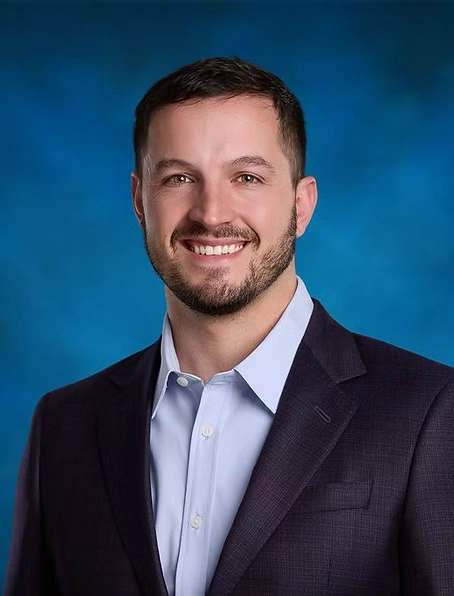
Dr. Ramirez completed his Sports Medicine Fellowship at the renowned Steadman Hawkins Clinic in Denver, where he served as the associate team physician for the Denver Broncos and Colorado Rockies. He finished his orthopedic residency at Dartmouth Hitchcock Medical Center, earned his medical degree from UT Health San Antonio, and holds a Bachelor of Science from the University of Texas at Austin. While at Texas, he played linebacker for the Longhorns and received the Academic All-Big 12 Award. During residency, he served as co-sports chief, managing team coverage and orthopedic care for Division One collegiate and high school athletes in football, hockey, lacrosse, and rugby.
Dr. Ramirez specializes in reconstructive sports medicine surgery, arthroscopic procedures, and the comprehensive treatment of sports-related injuries, helping athletes and active patients get back to the activities they love.
Now practicing at South Texas Bone and Joint, he’s excited to serve the Coastal Bend community with the same high-level expertise he provided at the professional and collegiate levels. When he’s not in the clinic or operating room, you’ll find him hunting, fishing, hiking, camping, off-roading, riding motorcycles, running, weightlifting, woodworking, doing photography and drone footage, and most of all, spending quality time with his wife and daughter. It’s fantastic to have him here in South Texas. Let’s dive in with Dr. Cody Ramirez.
Dr. Cody Ramirez: Sir, well, thanks for having me.
Anthony: Amazing to have you on. Thank you so much for taking your time here. Let’s dive in right away. Dr. Ramirez, not many people can say they’ve gone from playing linebacker for the University of Texas Longhorns to caring for professional athletes with the Denver Broncos and the Colorado Rockies. Walk us through that journey. What drove you from the field into medicine, and how has your own athletic background shaped the way you treat patients today?
Dr. Cody Ramirez: There absolutely. So, you know, my drive to do what I do just comes from a couple different things. I think part of it is an enjoyment of being able to fix things. I’ve grown up where if something broke, if I didn’t fix it, I wasn’t getting something new. And so I learned from a very young age, you know, if something’s not working, figure out how it works and fix it.
And so that kind of combined with my affinity towards people. I like talking with people. I like taking care of people, being considered helpful in any aspect of life. But those two things work together to point me towards being an orthopedic surgeon, where you get to fix things. You get to fix torn ligaments, broken bones, replace joints, get people working again, get them moving again, and help their pain.
And people are generally pretty happy with orthopedic surgeons. You know, I feel like I do what’s called “happy medicine,” which is a lot of the patients end up being very happy at the end and have improvement. And so that’s been a big drive for me.
And I think, as far as my athletic background, that’s kind of what pushed me into the sports portion of orthopedic surgery because there’s a lot of different ways you can go. But I really enjoy working with athletes. I mean, I’ve been there myself. I’ve dislocated my shoulders seven times between two, making a bunch of fingers and toes. You know, I’ve had a tibial plateau fracture, a knee dislocation. I’ve had a lot of different injuries.
And so I feel very capable and comfortable talking to athletes who are going through the hard part of sports, which is an injury. A lot of times it’s at a critical moment in their careers, whether it’s a high school student or a collegiate athlete getting ready to go to the draft. And I get to communicate that, “Hey, I’ve been there.” And I think that’s been a major help for me and helped me have a good impact with a lot of my patients.
Anthony: Wow, that’s amazing. You know, especially getting to the higher end of collegiate sports. And on the defensive side, you’re a linebacker. It takes a special commitment to want to play defense on that side of the ball. Any lessons there that you carry forward today?
Dr. Cody Ramirez: Yeah. I think, you know, lesson one there is, I think if you looked at me in person, I’m far from the prototypical linebacker at Texas. And so I think for me, the thing that I took from that is the shortcomings that you may have from God-given talents, a lot of that can be overcome with drive and ambition and work effort.
And I think that I did a lot of those things. I made an effort to never just be okay with where I’m at. I always want to exceed and excel. And I did. I mean, I actually got some playing time and I was respected by all my teammates, which was great, as being somebody that’s not scared to go in and play defense, be a linebacker.
And so I think those lessons for me are something that are critical and keep me going in what I’m doing today.
Anthony: No, that’s amazing for sure. I know a lot of people in Texas can relate to the drive, with Texas high school football as big as it is. And so there’s a lot of people that can relate to that for sure. What initially drew you to your specialty? Do you have family members in medicine, or was there a personal moment or mentor that influenced your path?
Dr. Cody Ramirez: Well, I think a lot of it has to do with just my history was sports. You know, I got injured a lot, so I got to work with several orthopedic surgeons in high school or even a little bit younger, and it was something that I really enjoyed, again, the athlete perspective of it.
And I decided all the way before medical school that I was going to be an orthopedic surgeon. I actually wrote on my medical school cover letter that that’s what I was going to be. I was going to be an orthopedic surgeon, and I’ve kind of held to that the whole time.
Again, I think it’s just, it’s the happy part of medicine. You get to work with your hands, and three, from a sports perspective, I get to work with a lot of athletes, which is great. Athletes are always driven, they’re motivated, and those patients tend to do really well.
Anthony: Yeah, you spoke about it a little bit there with how you work with athletes in the past with the Colorado Rockies and the Denver Broncos. You’ve been involved with high-level athletes throughout your career. What gives you a greater sense of purpose when working with athletes and active individuals? Is there something deeper there for you beyond even the medical side of things?
Dr. Cody Ramirez: Yeah. I mean, I think part of working with the athletes at any of the levels is just seeing the motivation and the drive people have. I think there’s a very human side to medicine of people trusting you, and there are whole lives in your hands in certain circumstances, particularly if you’re working at the professional level where things don’t turn out well, they may not have their career anymore.
And so I think that level of trust is something very impactful. And then seeing the drive that those people have, just the motivation, the determination, the work ethic, that’s a very unique side of what people do.
Not to make it short-sighted for other people that are not necessarily athletes, but I think when the surgery puts their job on the line, that’s something that’s very impactful.
Anthony: Yeah, and you see it oftentimes even with the weekend warriors who had an athletic career but maybe didn’t make it all the way, but they were highly involved at those times. And now they have maybe knee pain or shoulder pain or something that was minor back in the day that maybe went through arthritic changes a little quicker. Is that something that you see on your end with even the weekend warriors?
Dr. Cody Ramirez: Yeah, no, absolutely. I mean, there’s a lot of tough people out there, and they do some good damage to themselves and just keep pushing through, and at some point it catches up to them. So you definitely will see that with the weekend warrior type.
And the other thing is when you’re not a full-time athlete, a lot of athletes have the drive to continue to want to be athletic. You do those activities, and that’s where you get that term you’re talking about, the weekend warrior. They have their main job with nine-to-five Monday through Friday, and on the weekends they’re going to push it hard.
When you don’t have the availability to keep doing that same conditioning you’ve been doing for your high school, collegiate career, and professional career, it takes a toll, and that’s where people will get injured on the weekends.
Anthony: Right. Definitely see that. And in South Texas, baseball and softball, a lot of athletes looking to extend some sort of enjoyment on that kind of thing. So definitely something to pay attention to.
As far as when people are looking for education, you know, in today’s age they’re trying to make informed decisions. They’re turning to the different AI tools online, researching more than ever. But there are limitations from what someone can just get from a screen. In your view, what truly defines exceptional care?
Dr. Cody Ramirez: So I think one of the biggest things to be accomplished with any surgery, nonsurgical treatment of a patient, is the patient actually happy with the care that they received, right? Because there are times where things are out of your control. Bad outcomes can happen. Repairs can fail, bones can re-break or not heal. Things like that can happen.
And I think it’s how you handle those situations that really determines the overall satisfaction from a patient’s perspective. And if you truly care about a patient, they know. Like, when you really care and it’s known that you’re doing everything you can to help them out, they know.
And I think that’s a huge metric that I stand behind with my team. My ultimate goal with my team is that—it’s probably an impossible goal—but every patient leaves happy, right? That they leave feeling like their problem was heard, that it was addressed, and that they are cared about.
And I think that the outcomes are better when people know that you care. And so that’s a big part, I think, that is beyond the typical patient-reported outcome measures that you’ll get. It’s just how the patient feels about their care in general.
Anthony: For sure, and that’s definitely hard to get just from a quick Google search or AI tool that you’re trying to find what is out there. And so it’s such an important thing. Oftentimes we’ll see people who dive into research, researching their shoulder or their knee, and they’ll see certain statistics, but it doesn’t really play into how they’re presenting or how their symptoms are playing out. And so do you see that in the clinic when people are trying to do their own research online?
Dr. Cody Ramirez: Yeah. I think research—you know, we have a saying in orthopedics: you can find that paper that supports anything you want to do, right?
I think research is a blessing and it’s a curse, and I think our job as orthopedic surgeons is to be able to really facilitate that research and help people understand how it applies to them.
Because you get a research study, you’re talking to somebody with 65 with a rotator cuff, and they’re applying the paper where the general population was 25 years old. You got to tell them, “Hey, as much as this has good outcomes with these procedures, it’s not you. It’s a different population.” And so there’s a lot that goes into that.
And the other part too is, when you’re looking at some research, a lot of the research will look really good. But then when you start diving into the paper and you realize, “Hey, they kind of kicked everybody out that’s not going to do good to begin with,” then you start to wonder about the quality of that paper, wonder if it is applicable at all.
And so I think that’s our job, is to help patients figure out if the research that they’re finding is applicable to them. And honestly, sometimes patients will find stuff that I don’t know about and I’ll look and do it. If they tell me, “Hey, this is a good paper and this said this,” I’ll read it and I’ll look into it. And if I agree, I’ll tell them, “Hey, yeah, you taught me something new. I appreciate this.” And if I disagree, I’ll explain why and tell them, “Hey, I think this is not good quality because of this.”
Anthony: Yeah, nice. It’s good to see the interaction happening within the specialist level because I know sometimes patients are hesitant to have those conversations, or they figure out a paper that says something that they want to hear, and that’s all they’re hearing. So it’s good to hear that that’s going on.
As far as conditions go or cases, what do you most frequently work with? So we know your focus is around the knee, hip, shoulder. Are there certain cases that you work with within those regions more often than not?
Dr. Cody Ramirez: Yes, I’d say I do a lot of rotator cuff repairs, so shoulder injuries as far as repairing the rotator cuffs, shoulder stability, so people that dislocate. I’ll do a lot of labral repairs and stability procedures.
I also am in relatively high volume with regards to shoulder replacements too. Active individuals end up getting pretty worn out arthritis, and they’ll need either an anatomic or reverse shoulder to replace them. I do a decent high volume of both of those.
For knees, I do a lot of ACL reconstructions, a lot of meniscus work, a lot of cartilage work. There’s basically very few things about the knee that I don’t do, and I supply the full gamut from preservation surgery to replacements.
And hips, honestly, the same thing. I mean, in hips, I’m the only guy in South Texas that does hip arthroscopy, so minimally invasive surgery to help address labral tears, impingement, early cartilage changes, or cartilage. I do a pretty decent number of those and I have pretty good outcomes with it.
I also do hip replacements as well. So for those people that are too far gone for hip arthroscopy, I can provide kind of the whole gamut of hip treatment.
Anthony: I’d like to dive in a little bit more with the hips because I know that can often be a difficult joint to kind of tease out as far as the symptoms patients are feeling. You know, sometimes they’ll complain more of groin pain or low back pain. Can you talk about some of those patients when you end up seeing that it’s more of a labral issue or something going on with impingement? How do you guide that assessment, and what kind of things should patients be looking out for?
Dr. Cody Ramirez: Yeah. So the hip is definitely a complex thing. Even being considered a hip specialist, I’m forever learning. There’s always somebody that will come in and perplex you a little bit.
But as far as the hip goes, deep-seated groin pain, in my opinion as a hip guy, is a hip/groin issue until proven otherwise. If you’re elderly, usually it’s associated with arthritis, and elderly is getting into the seventies, sixties, so if you’re 60 or 70.
If you’re 16 and under and you’ve got deep groin pain, you could have some arthritis or it could be a labral tear. You know, there is pain in the hip with labral tears. It’s kind of a pinch pain or deep-seated pain in front/groin, and usually it’s kind of constant, nagging. People have been dealing with it for a while and don’t really have a good explanation as to why that’s happening.
And then younger people, actually younger women, are a big proponent of people that will have micro-instability in the hip. And so this is kind of a newer field that’s not super well understood, and a lot of these people get tossed around and told nothing’s wrong.
They have a normal MRI, normal X-rays, everything’s hurting, but nothing’s really helping. And so that’s where we start to understand the bony instability that can lead to a painful, popping hip in a young individual.
So popping, painful hip in a young woman, typically twenties, thirties, teens, is hip instability until proven otherwise, and those patients typically are very happy once they’re treated.
And so groin pain, hip pain in general, is a good thing to look out for. When you start having pain that’s in the back of the hip, the butt—I always tell every patient it’s no man’s land. That can be the hip, it can be the outside of the hip, it can be the lower back, and so that’s where you start getting into a little bit of a more difficult diagnosis.
And I use injections frequently as a diagnostic tool for me. And so in difficult cases, if I’m in between, I’ll tell people, “Hey, we’re going to give you an injection.” And when I inject your hip joint, there’s some lidocaine in there. So if I numb your hip joint, if pain’s coming from your hip, that pain should go away. If some of the pain’s coming from the hip, some of that pain should go away, and it kind of helps me narrow down exactly what’s going on.
And I think that’s a useful tool to help me have relatively happy patients with regards to hip surgery.
Anthony: Well, that’s such good information there. With regard to the hip, he mentioned the labrum, so the hip has a deeper socket as compared to maybe the shoulder joint. They’re both ball-and-socket joints. Do you often see labral tears that people commonly just don’t know about until they get some imaging with regard to the hip?
Dr. Cody Ramirez: Yeah, absolutely. So I also will tell patients that if you MRI every hip over the age of 45, you’re going to find labral tears. Now, what percentage of those people are actually having symptoms varies wildly.
And so it’s one of those things—just because you see it on the picture doesn’t mean it’s going to cause you a problem. And so my job is to treat those people that are symptomatic.
And so a lot of those labral tears, again, you talked about it being a ball and socket. It is the labrum’s job to help create a suction seal for the hip and give you stability.
And there’s actually a lot of really good research out that shows everybody thinks the hip is very stable. It’s actually not in some instances, and people will often explain, “I feel like my hip’s popping out of place.” And it is.
There really was a paper where they did a study on ballerinas, actually, and they put them in an X-ray machine and they did X-rays on their hip standing, and then they did the X-ray of their hip doing the splits, and it actually displaced a lot. The ball moved.
And so there’s actually a decent amount of movement in the hip that can cause people pain. And so when you see that, a subtle labral tear can cause the suction seal to no longer function when people will present with a decent amount of groin pain and instability about the hip.
Anthony: Wow, and so I know with the shoulder, when there’s a significant labral tear, it almost always calls for surgery or some sort of surgical intervention due to the instability. Is that the same thing with regard to the hip, where you know these symptoms—you can stabilize around the hip, you can strengthen around it—but we really have to kind of get in there and clean up that labrum and repair that before we’re going to see some significant changes?
Dr. Cody Ramirez: Yeah, so I think the not-so-fun answer is it depends. Yeah, it’s case by case basis.
And so if I have a stout, big, muscular young man who’s got a giant cam lesion and a labral tear, then almost certainly he’s going to continue to have symptoms unless you address the cam lesion.
If you’ve got a relatively fit young lady who has no impingement, is mildly dysplastic, and has a labral tear, she’s definitely going to do a lot better when you do labral repair hip scope.
Now, there are some instances where it’s not a good idea to try to fix the labrum in isolation.
People that have frank hip dysplasia, so you do some measurements on their hips, and if they’ve met the dysplastic criteria, let’s say their lateral center-edge angle is 20 or less, I can do a labral repair and they’ll be happy for about two years until they re-tear it.
And the deal with that is, you can’t fix a bony problem with a soft-tissue procedure. And so those people actually need a bony procedure versus just an isolated labral repair.
So it’s a little nuanced. But I will often also offer people a trial of nonoperative measures because, like I said earlier, there are people that have labral tears, they’re completely asymptomatic, don’t have any pain. So if I can get those people there and they can avoid surgery, that’s also a big win for me.
Anthony: Yeah, and so thank you for all that. That’s awesome information there with regard to the labral tears. You mentioned that soft tissue and bony problems aren’t necessarily going to be solved when you do soft tissue work.
What is the in-between for those people with regard to getting a total hip replacement? Are there procedures in between stages for going all the way to that point?
Dr. Cody Ramirez: Yeah, so I think when I think about hip procedures, if you’re talking about an acetabular tear, I tend to break those down and simplify them into two different classes. There’s those from impingement and those from instability.
And so if you have somebody that has impingement, typically if you take care of the impingement and you fix the labrum, they’re going to do good. If you don’t take care of it, the long-term ramifications are that they develop osteoarthritis and then they go on to get a hip replacement at a younger age.
With instability, again, the ball and socket don’t meet up. They’re not fully congruent. If you fix the labral tear but you don’t address the bone well, then they’re going to continue to be unstable. They’ll fail to repair and then continue to have worse pain.
And so the medium/intermediate procedure for that would be what’s called a PAO, or periacetabular osteotomy.
And so that’s actually where you cut the pelvis, you cut the socket, you realign the socket, and you give coverage where there wasn’t any. And those people tend to do pretty well, and the endgame for that is, again, to put off ever needing a hip replacement.
Because untreated hip dysplasia will go on to develop osteoarthritis. If it’s really bad dysplasia, they’ll go on to frankly dislocate their hip and ultimately they’ll end up getting a hip replacement.
And so that’s the goal. That’s kind of the stepwise progression: with impingement, try to get rid of the impingement, fix the labrum, and prevent a hip replacement. If that doesn’t work and they never get it done, ultimately they get arthritis and they get a hip replacement.
With dysplasia, if it’s borderline dysplasia, you can always offer to fix the labrum, but you have to have a frank conversation—it may fail. But if they’re dysplastic and hypermobile with a labral tear, they need PAO before getting anything done with the labrum to prevent further failure down the road.
Anthony: Wild. That’s amazing to hear that it’s not just one extreme or the other, that there’s a bunch of options in between there. And so are we seeing these kind of patients mostly people that have higher-end use of their hips? So maybe like soccer players, ballerinas, you mentioned dancers, that kind of thing? Or could it be just from a genetic problem or maybe just pelvic alignment, bone alignment, kind of thing? What kind of patients are we mostly seeing with regard to these procedures?
Dr. Cody Ramirez: Yeah. I mean, there’s kind of a combination of we have ideas and then we don’t know some of this. Like, if you have a hockey player that’s got a hip thing, I would almost put my life savings on he’s probably got a giant cam lesion and a labral tear. Same thing with a catcher.
And so there’s certain sports or positions that do increase the risk of developing some of that. Some of it is genetic and some of it is developmental too.
You know, if there’s a kid who’s very overweight growing up and they get a SCFE that’s missed, that’s basically where the growth plate slips on the hip. If it gets missed, eventually it’ll heal, but then it heals with a giant extra piece of bone on the outside and they get impingement, and those patients develop arthritis as well.
And so there’s part of a multitude of different things. I will say that I see it regularly in practice where I will see a father and son and they’ve got identical issues going on. I mean, it’s very strong with men to pass it down to their son for impingement.
Anthony: There’s a phenomenon in the clinic that we see. For whatever reason, I just wanted to ask, do you commonly see it on the right side more than the left? It seems to be like with SI joint problems, hip problems, groin problems, that kind of thing. For whatever reason, that seems to be the case. Is that just something that we’re seeing, or do you kind of see that as well?
Dr. Cody Ramirez: I don’t know. That’s actually kind of interesting. I think with my practice now—this is with me thinking off the top of my head—I don’t know that I’ve noticed too much of a sided difference with regards to FAI or dysplasia.
They don’t always run in pairs. A lot of times they will, but not always. And so I don’t know. I don’t have a good answer. I haven’t noticed any particular side with that.
Anthony: Nice. I just wanted to see if you had any commonality with that, or maybe it’s just something that came on a quick trend through what we’re seeing there.
So with your role, and you talked about all the different types of things that you’re seeing, what type of patients tend to thrive with your care? Is it more proactive patients, or are there certain age groups that you see, or a certain type of preparedness that a patient comes with?
What are you seeing in the clinic as far as when you get a patient in front of you? You can kind of tell, “This patient’s going to do really well.”
Dr. Cody Ramirez: I mean, I think the patients that are going to do well are the patients that come in and they just want to get better. You know, it’s hard to describe, but you can tell when somebody’s there and they want to get better, they want to do well, they’re doing all the things, or following our recommendations.
I mean, those patients do really well. Not to say that if you’re having pain with physical therapy and you’re wanting to back off some, those patients can’t also do good as well. But I think when you’re fully invested and you believe in the care, I think it kind of goes back to what I was saying earlier, that if the patient’s happy with the care that they’re getting, they believe in it, they’re going to have a better outcome.
And as far as a range of patients that I see, I mean, I see all ages from 13. I think the youngest patient I’ve seen is 11, but I see all the way from 13. My oldest patient that I’ve done surgery on was 103, and they’ve all done fantastic. I mean, they’re all doing really good.
And so I don’t really have an age cutoff for seeing anybody. And if you’ve got a problem and you know it’s something that is treatable and fixable, and we go through everything and that’s what you want to do, I’m happy to help people out.
Anthony: That’s great. That’s great to hear. As far as you mentioned again, you work with athletes on a regular basis, and sometimes we’ll have them come in during the season, and maybe they’re afraid to kind of go to the next level of getting in with the orthopedic surgeon in fear of maybe getting sidelined or not being able to make it through the whole season. What can happen when patients wait too long to seek care? And if someone’s hesitant or unsure about reaching out, what would you want them to know?
Dr. Cody Ramirez: So I think it’s never a bad idea to get checked out. If you’re ever concerned you’ve got something, getting seen can be a quick in-and-out of, “Hey, you’re fine. You’re good to go,” but it can also catch the snake in the grass that’s waiting to bite.
So, you know, there’s been plenty of patients that I have seen that waited and took something that was a relatively easy fix and made it a lot harder with harder outcomes.
And so things that come to mind for me are people who get Achilles ruptures or just biceps ruptures and they’re chronic. When they’re acute, they just happen. If you fix them, they’re smooth as butter, very easy, they do great. When they’re a few months out, that changes the ball game a lot, and it can make things a lot more difficult, a lot harder to deal with, more high risk.
And so I always think it’s a good idea to get seen. And I think that they should go in knowing, you know, I try to push really hard, but just because you’re coming to see the surgeon doesn’t mean you’re getting surgery.
My job is to treat the patient, make you better, make you whole. And so if I can do that without surgery, help you continue to play sports, that’s what I’m going to do.
If I think, “Hey, you’re going to cause more damage or you’ve got an issue that needs to be fixed,” I’ll let you know. But it’s a shared decision-making process for sure.
Anthony: Yeah, and that goes, I think, a little bit with the athletic side of things. People talk about being hurt versus being injured per se, and trying to play through something that hurts rather than trying to play through an injury. And I think you’re talking about, you know, make sure you get all the information you need, come in and see me, and then we can walk you through what the best decision looks like going forward. Is that kind of what you’re going towards there?
Dr. Cody Ramirez: Absolutely, yeah. I think it’s to get some options.
Anthony: I often get questions about imaging, X-rays, MRIs with regard to injuries. You know, with the shoulder and knee, patients are asking, “We had this injury. Should I get an X-ray? Should I get an MRI?” And then maybe they do those things and then they’re trying to make decisions based off that. How important is it to know and understand the role of imaging in conjunction with a thorough examination from a specialist?
Dr. Cody Ramirez: Yeah. So I tell every patient, you treat the patient, not the picture. And so if you MRI everybody, you’re going to find stuff. And so whether or not that stuff needs addressing is a different story.
And so the clinical exam is critical. You’re not touching the patient, you’re not putting them through a range-of-motion exam, strength exam, and who knows what’s going on.
And so there’s been times, you know, where they’ll come in with an MRI of the shoulder and it looks like they’ve got a small cuff tear, and it’s not even the shoulder that’s bothering them. They’ve got some cervical radiculopathy that’s going on that’s bugging them.
And so it’s always critical to do the exam. And with regards to what imaging you get, X-rays are always a baseline. X-rays help you see the bone. That’s how we typically grade arthritis. That’s how we look and identify fractures.
We can even see soft-tissue injuries with X-ray with different changes in the alignment of the bone. And so X-rays are always critical. And then an MRI helps you look at the soft tissues.
MRI is not the end-all, be-all in imaging. It helps a lot, but sometimes we need CT scans. Sometimes the X-rays are more helpful than the MRI. And so they all kind of play their part together.
And I think it’s our job to align that with the clinical exam to figure out exactly what imaging is needed.
Anthony: That’s what we were talking about with the imaging, and patients have a lot of conversation around that. And so it’s good to hear, you know, on your side of things, how that’s utilized. And it’s not all the story. It’s part of the story, kind of thing.
All right. Can you talk a little bit more about the shoulder surgeries with regard to the different procedures you’re doing? Maybe with the rotator cuff and how someone can come in and have a smaller rotator cuff tear and maybe that is a big process for them to go through that recovery and rehab, or maybe someone else had a different type of tear and they breeze through the recovery and rehab.
But the fallacy of maybe comparing or trying to compare my process with your process and how different people respond to different things.
Dr. Cody Ramirez: Yeah, absolutely. And that’s actually a very common question. I’m getting, “My buddy had this surgery and he was at work two days later. Why am I still in a sling?”
And so rotator cuff in particular, no two rotator cuffs are the same. Even when surgery, when you’re fixing them, there’s always some subtle difference that makes it a little bit more difficult.
And so a small rotator cuff repair—you have a rotator cuff repair, a massive rotator cuff repair, you’re still getting a rotator cuff repair. So the words are the same, two entirely different processes.
And so if you get somebody with a small tear, typically I’m more aggressive with physical therapy. I’ll let them get out earlier and do more movement versus an inlay tear. Massive tears, you worry about those.
Those can look absolutely perfect when you’re done with the surgery and they can still re-tear. They can still not heal. So I protect those people more often. I keep them in the sling longer. They don’t start physical therapy nearly as quickly as the smaller tears, and they may continue to have some pain and discomfort. They may not be whole, and that’s part of the biology issue that goes along with rotator cuff tears too.
And so there’s a lot that goes into it. And I honestly don’t think we know the full story with rotator cuffs. It’s still a giant area of research. There’s multiple techniques that are continuing to come out and to be looked at to try to improve it.
And typically, when you’ve got a lot of different techniques, it means we don’t really know the best answer for it. So I think that’s a solid question you bring up. What’s the difference between one person versus another? Everybody’s going to have a slightly different care and recovery.
Anthony: For sure. And so going back to the hip as well as the shoulder, with radiculopathy, you mentioned sometimes they’ll have a rotator cuff problem and then you go up and it’s actually something going on in the neck. Do you see that in the hip as well as far as back pain is such a common thing? And sometimes it turns into the degenerative stuff that’s going on with the lumbar and people have sciatica or other impingement-type problems. Does that sometimes affect the muscles and soft tissue around the hip joint?
Dr. Cody Ramirez: Yeah, absolutely. So they’re very closely intertwined, and the hip and the back are something I’m probably the number-one referral to my spine partner, and he’s probably the number-one referral to me, because the hip and back are very closely intertwined.
And so I’ll catch a lot of spinal stenosis or radicular-type pain, degenerative disc disease, with stiffness in the back and FAI in the hip.
If you have a big cam lesion that causes some posterior tilt into the pelvis, as you try to accommodate hip flexion, you can have some lumbar overload that can cause low back pain.
People can have pain, so there’s actually a lot of that that’s very closely intertwined. Some of it we don’t fully understand yet, but those things for sure are caught together all the time.
Anthony: And, you know, sometimes you think, “Oh, it’s definitely my hip,” and I have an argument with a patient that I promise you it’s not. And I go, “Let where injections come in, they’re helpful,” and I tell them, “Go get this epidural injection.” And then they tell me a response.
I had one today that came in. He said, “All my pain went away, all my leg pain, all my hip pain, everything was gone.” And so I said, “Okay, well, you know that’s not numbing your back. I mean, numbing your hip.” And so that’s how I kind of help diagnose those things.
Yeah, and then going below the hip, so to the knee, do you sometimes see where total knee replacements, you know, maybe they’ve been using a cane or a walker or been less mobile, and then all of a sudden they get their knee replaced and they’re very active? They’re putting more strain on the hip joint. Does that sometimes then cause groin pain or a flare-up higher up the chain that now becomes a hip problem?
Dr. Cody Ramirez: Yeah. I think if you think about it from a purely biomechanical standpoint, if somebody’s kind of walking with a flexed knee to offload and it’s hurting, their hips are going to be slightly flexed.
And so you straighten out that knee because you get it replaced and their pain’s gone, and all of a sudden you’re putting their hip through a range of motion it hasn’t been in in a while and it may start hurting. So that’s definitely something that we’ll see.
I regularly will get standing alignment X-rays where I’m looking at the hips and the knees to see because then I can actually kind of give people a heads-up. “Hey, just so you know, you’ve got arthritis. So we get this knee down, you start some pain, that may be where it’s coming from.”
Anthony: Yeah, for sure. And so that’s good to know, because it’s pretty common to have back pain, pretty common to have knee total knee replacements nowadays. And so people often leave out that, “Why is my hip hurt afterwards?” Or, “I’m not walking as well as I want to.” And so it’s good to kind of circle back and understand the full anatomy and what could be going on and involved in those different things.
Anything else on your end that you’d like to touch on today?
Dr. Cody Ramirez: I mean, I think from my end, I just want to emphasize that I think as far as going to see a surgeon and getting care, you should always feel comfortable seeing your surgeon, right?
You should always feel comfortable asking questions. You should always feel comfortable asking questions that are against what your surgeon is recommending. I think people need to be involved in their care. They need to have some idea what’s going on and full understanding.
And then I think if you have the right guy that’s taking care of you, they’re going to have no problem going over those things and answering all the questions for you.
And I mean, the biggest thing I want to emphasize, and like coming here talking to you, is that me personally as a surgeon, I’m very open to communication with the patient, with our therapist, with everybody regarding the care of the patient, making sure that we’re just getting people the best they can.
Anthony: Super important, especially in today’s day and age. You know, medicine’s changed so much in the past 10–15 years, and so people are now accessing minor emergencies or physical therapy first on a direct-access basis.
So they’re not always touching base with their PCP, and so it’s important for them to understand how easy it can be to get into an orthopedic surgeon’s office and just simply have these conversations and seek out what the next avenue is for them and bring in that expertise at that level.
And not knowing that surgery is the only option, there’s always other options, and just having a conversation is sometimes the best option as well.
Dr. Cody Ramirez: Absolutely.
Anthony: For sure. All right, so anything else on your end?
Dr. Cody Ramirez: I guess the only other thing I’d bring up too, I don’t know that we touched on it much, but from an orthopedic surgeon standpoint is biologics.
And so I regularly get a lot of people come in and ask about biologics, which they’re not familiar with. Determinants basically what proteins or injections can you give to people to help them feel better?
You know, I’m a big proponent of something called PRP, which is platelet-rich plasma. It’s a great injection. I have excellent success with it. You know, greater than 95 percent of my patients are extremely happy with the PRP injection, and it’s something that can be helpful. It’s a non-surgical alternative.
We also do ultrasound-guided procedures as well, and so ultrasound really helps you target those tissues and you know exactly where that injection is going. You know exactly where your needle is getting to, and I think those are big helps.
And so a lot of times, for instance, if I’m giving somebody an injection of hyaluronic acid for arthritis, sometimes people come in and say, “Hey, I’ve had it before, didn’t work.” And so I ask how it happened.
And when they tell me, “Oh, I got the injection, it hurt like crazy and it was really uncomfortable. Didn’t make any difference. They didn’t use the ultrasound,” I’m always pushing, “Let me try it with the ultrasound. You tell me if you feel like it’s different.”
And I have yet to have anybody say, “Oh yeah, that was the exact same.” Most people are like, “Wow, it didn’t hurt. How was that? That was great.”
I think a lot of it is being able to see where everything is. So there’s a lot of different things that we can offer. Even with biological injections, gel injections, other things that are not surgery, I think are always options that people don’t always know about.
Anthony: Yeah, for sure. And so there’s a skilled portion to the injections for sure. And you mentioned ultrasound, you know, that can help guide and get it exactly where it goes. So are you doing those on the hip, shoulder, knee—all three?
Dr. Cody Ramirez: Yeah, all three I do. Hip, shoulder, knee, even elbow injections. And I use ultrasound for basically everything except for a subacromial injection.
Subacromial, you can have that. That’s about as cheap as you can get without needing an ultrasound. But everything else, I use the ultrasound. I think it helps, and it just helps target that medication exactly where you want to get it.
Anthony: And so are these mostly soft tissue or the more arthritic conditions, as far as tendinopathy, or what are we seeing with those?
Dr. Cody Ramirez: It’s all of the above. I do the joint injections with cortisone or steroid injections. I’ll do with HA, which is hyaluronic acid. I tell people like putting oil in a gearbox. It lubricates the joint, good for arthritic joints.
And PRP is another one. PRP actually has some slightly increasing evidence for arthritis. For other arthritis, it’s good for younger patients.
I actually push PRP pretty hard on any intra-articular joint injections for young people because it doesn’t have the same risks for the cartilage that a cortisone injection does with regards to cartilage damage.
And so that’s a great injection. And I do a lot of PRP injections for tendinopathy, a lot of tennis elbow, a lot of hip abductor issues.
I have done PRP and I have had a lot of very happy patients with that. I’ve had great outcomes. And again, you’re using that ultrasound to find it, put it into the tendons. So you know you’re getting it into the exact spot that it needs to be.
Anthony: Well, that’s awesome to hear that that is being done because, you know, I’m sure that a lot of people that need that are just not aware of where or how to get it done, or maybe, like he said, they’ve had it but it wasn’t guided or done in a certain way. So that’s awesome to hear.
Yes, so Dr. Ramirez, I just want to generally thank you for coming on here. It’s been great. You talked about everything from your journey to getting to where you’re at and what drives you and what makes you stand up for the patients that you see and how you run your clinic.
We talked in depth about the hip joint. You know, there’s a specialty and skill there that you’re bringing to the Coastal Bend that wasn’t here before. So that’s awesome for people to have that avenue.
And then all the different shoulder and knee procedures that are available as well. So I know this is very, very in-depth about education. That’s kind of what we’re about, giving back. So I just want again to say thank you for coming on here.
Dr. Cody Ramirez: Yeah, well, thank you so much for having me and let me talk about what I love to do. I really appreciate your time too.
Anthony: Again, thank you so much, Dr. Ramirez, for your expertise and willingness to contribute to the Spotlight Series. Give Back is a core value with Avila Physical Therapy, and there’s no doubt that goal was accomplished here today.
For everyone following along, stay tuned to find out who will make the next appearance on the Coastal Bend Spotlight.